Physical Address
304 North Cardinal St.
Dorchester Center, MA 02124
Physical Address
304 North Cardinal St.
Dorchester Center, MA 02124

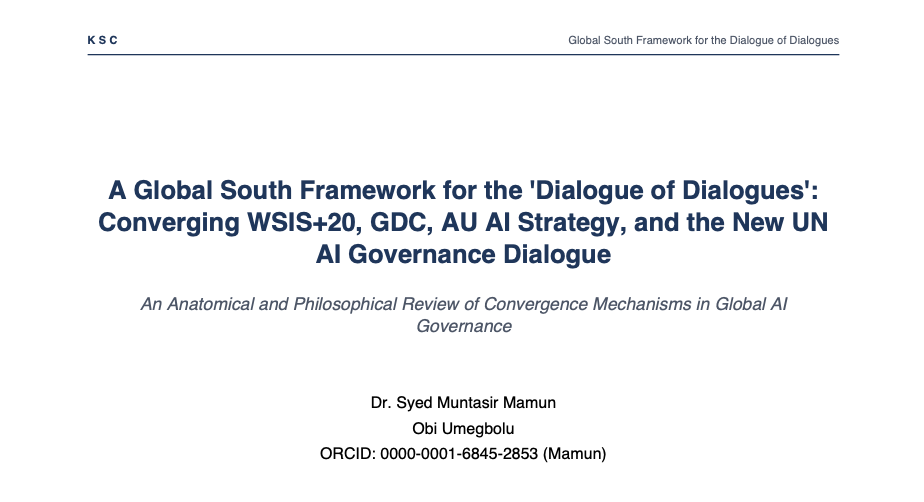
As artificial intelligence becomes increasingly embedded in public administration, many African governments face the challenge of adopting AI technologies while maintaining control over their data, institutions, and governance processes. This paper examines how African public sectors can strengthen AI sovereignty by adapting existing governance frameworks to the continent’s institutional realities rather than relying on approaches developed for more resource-rich environments.
The paper builds on the Governance-Aware Retriever Framework (GnARF) and proposes the use of Minimum Viable Innovation Engines (MVIEs)—small, cross-functional public-sector teams that enable governments to pilot AI systems, develop institutional expertise, and gradually strengthen governance capacity using locally curated knowledge and existing public-sector infrastructure.
It explores how AI systems can be adapted to African contexts through retrieval-augmented generation (RAG), local knowledge repositories, transparent decision logging, and context-sensitive privacy protections. The paper also evaluates the opportunities and limitations of this approach, discussing practical challenges such as institutional capacity, infrastructure constraints, talent shortages, and the importance of avoiding new forms of technological dependency.
Beyond technical implementation, the paper considers the broader implications of AI adoption for African knowledge systems, public administration, and digital sovereignty. It argues that responsible AI governance should support locally grounded decision-making while recognising the diversity of African institutional and cultural contexts.
Prepared as part of ongoing discussions on AI governance in the Global South, the paper offers practical insights for governments, policymakers, researchers, and development organisations seeking to build resilient, accountable, and context-aware AI systems that contribute to Africa’s long-term digital transformation.
Download the full paper via the link below.