Physical Address
304 North Cardinal St.
Dorchester Center, MA 02124
Physical Address
304 North Cardinal St.
Dorchester Center, MA 02124
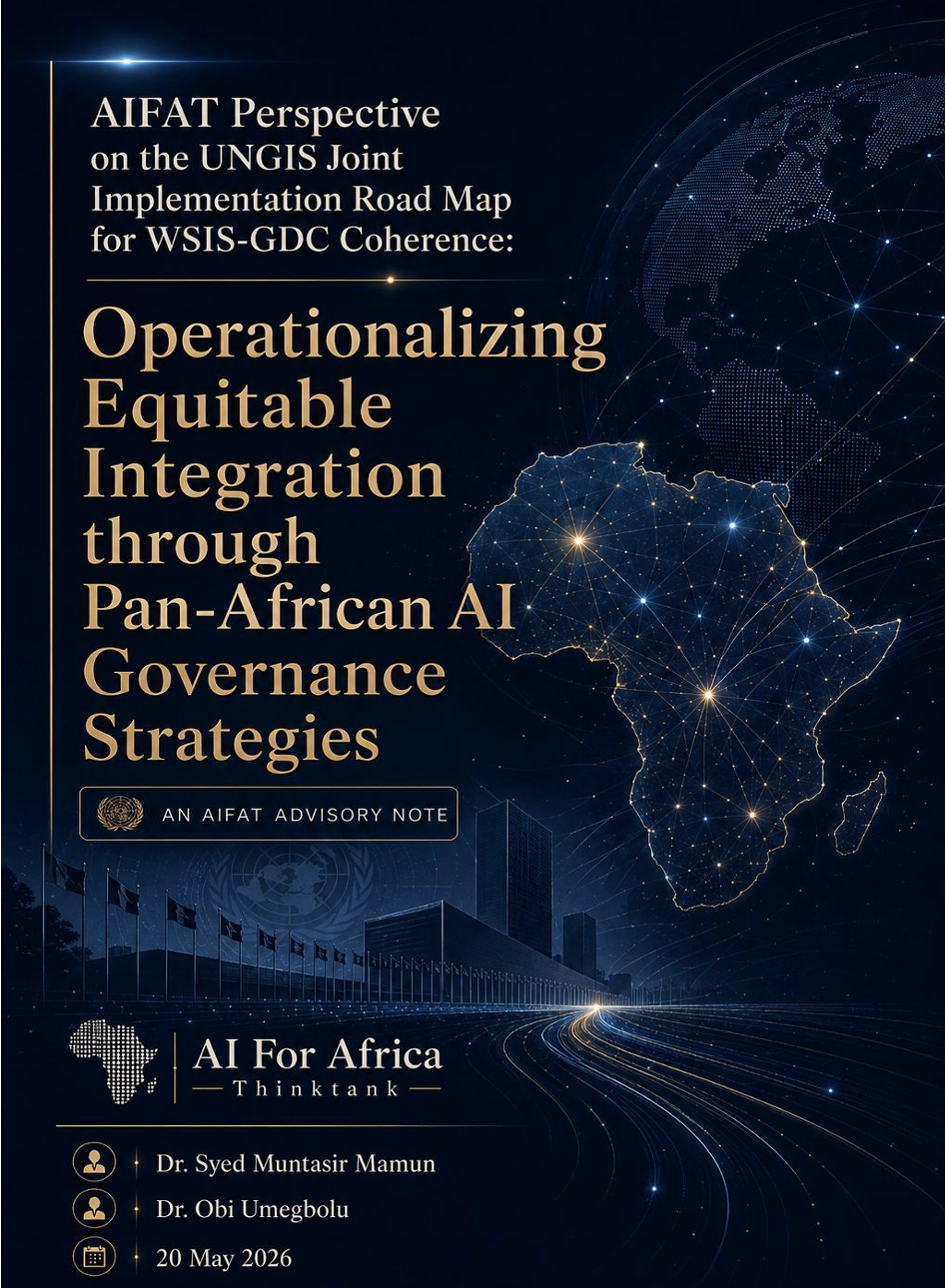
AIFAT Perspective on the UNGIS Joint Implementation Road Map for WSIS-GDC Coherence: Operationalizing Equitable Integration through Pan-African AI Governance Strategies
As the global digital order continues to take shape, Africa must not be treated as an afterthought in the design of its governance frameworks. This advisory note offers an Africa-centred analysis of the UNGIS Joint Implementation Road Map for WSIS–GDC Coherence and argues that the current moment presents both a risk and a rare strategic opening.
At stake is more than administrative alignment between global digital processes. For Africa, this is about digital sovereignty, structural fairness, and the power to help shape the rules that will define the next era of artificial intelligence and digital cooperation.
The paper warns that without deliberate intervention, the continent could remain trapped in a familiar pattern: excluded from core infrastructure, disadvantaged by language bias, exposed to algorithmic governmentality, and positioned mainly as a supplier of raw data rather than a co-architect of digital value. It highlights urgent concerns such as the rise of the Onopticon, the harmful cost and performance burden of the multilingual Token Tax, limited access to compute infrastructure, and the continuing gap between Africa’s demographic significance and its share of global digital power.
But this paper does not stop at diagnosis. It sets out a practical Pan-African policy response built around key governance pillars: Semantic Sovereignty, the Reserve of Humanity Doctrine, Infrastructural Sovereignty through DePIN and Dual Core Finance, and Agentic Tool Sovereignty. Together, these proposals offer a pathway for embedding equity, accountability, language inclusion, human oversight, and local value creation into global digital governance.
This is ultimately a call for coordinated African leadership. If the WSIS-GDC coherence process is to serve the global majority, it must go beyond institutional tidiness and become a vehicle for structural equalisation. Africa must move from passive inclusion to active rule-shaping.
Download the full paper via the link below.